/01

Anatomy 
Prime


A science-based training platform that connects workout data directly to the human body, through a real time 3D anatomy model that shows exactly which muscles are developing, which are neglected, and when recovery is needed.

ui design / ux design / animation / motion design

/02

Fitness

tracking 

solution

Most training apps log numbers in isolation like sets, reps, weight,  but offer no anatomical context. Users complete months of structured programming with no way to see which muscles are actually developing, which are being chronically neglected, and when they’re approaching injury risk.

Prime Anatomy was designed to close that gap. Every workout updates a 3D body model in real time, turning abstract training data into an immediate, visual picture of how the body is responding.

Problem

 “I train consistently but I have no real visibility into which muscles are developing or where my imbalances are building up.”

Solution

“An interactive 3D body model that responds to your training data, making muscular development and neglect immediately visible.”

/03

The 3d progress
model   

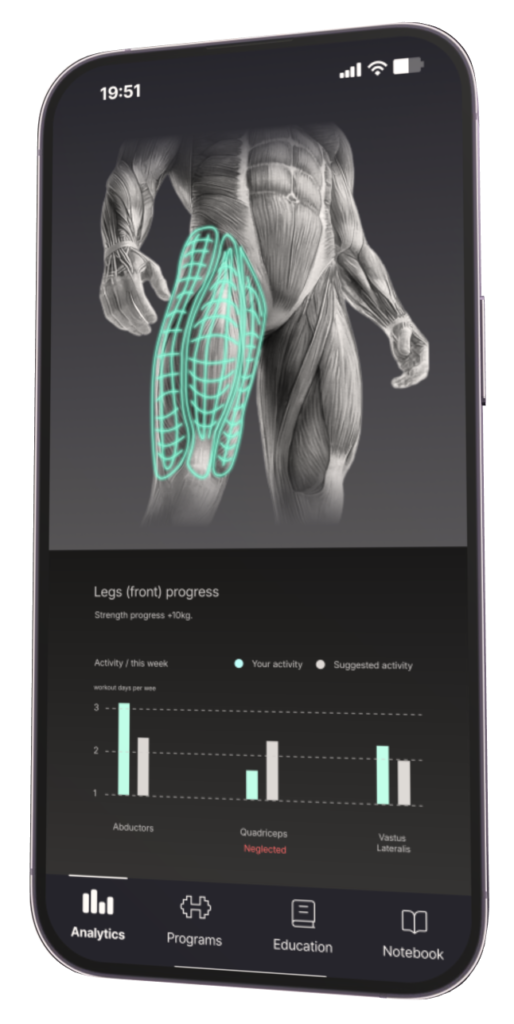
The anatomical model is the core UI element of Prime Anatomy. Muscle groups illuminate in turquoise based on real training data, giving users an immediate, intuitive picture of their body’s current state — trained muscles, neglected areas, and developing asymmetries all made visible at a glance.

Below the model, a micro-chart maps weekly volume per muscle group against suggested targets, so users can adjust training focus without navigating deep into analytics.

Muscle groups update dynamically after each logged workout.

Colour intensity reflects training recency and volume, not just frequency. 

Neglected groups fade to grey, making inaction as visible as action.

/04

The 3d progress
model   

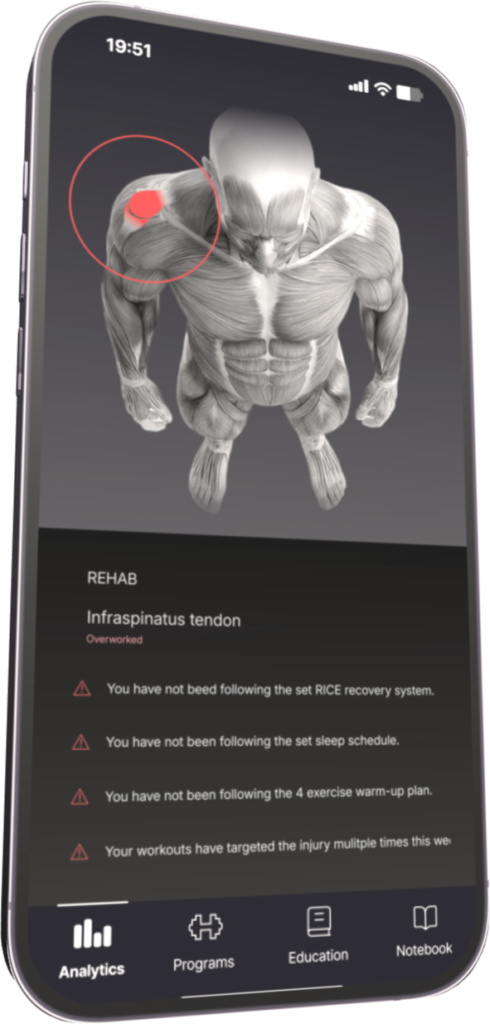
When the platform detects overtraining patterns like missed RICE recovery protocols, poor sleep compliance, skipped warm up sequences, or repeated targeting of the same muscle group, it flags the risk directly on the 3D model using a red warning indicator.

The Rehab screen surfaces the specific contributing factors as a prioritised checklist, giving the user a structured, actionable path back to safe training rather than a generic rest recommendation.

Overtraining alerts cross-referenced against sleep and recovery logs.

RICE protocol tracking with built-in compliance monitoring.

Detailed report available per affected muscle or tendon group.

/03

300+ exercises
Every detail

documented

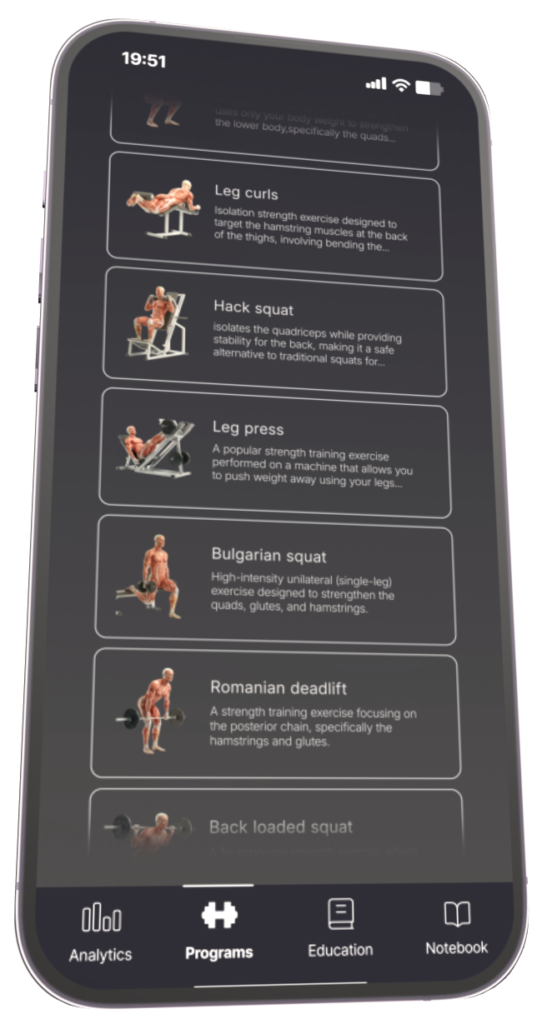
The exercise library goes beyond a simple list. Every movement comes with high-fidelity form guidance broken down by phase: setup, execution, and lockout , alongside muscle activation data, common errors, and targeted cues for each experience level.

Each exercise also surfaces intelligent pairing suggestions: complementary movements that balance the training stimulus, reduce injury risk, and make 

programming decisions easier for both beginners and experienced athletes.

Anatomy 
Prime

© copryright Martin Popovic 2026

/01

Anatomy 

Prime

ui design / ux design / animation / motion design


A science-based training platform that connects workout data directly to the human body, through a real time 3D anatomy model that shows exactly which muscles are developing, which are neglected, and when recovery is needed.

/02

Fitness

tracking 

solution


Most training apps log numbers in isolation like sets, reps, weight,  but offer no anatomical context. Users complete months of structured programming with no way to see which muscles are actually developing, which are being chronically neglected, and when they’re approaching injury risk.

Prime Anatomy was designed to close that gap. Every workout updates a 3D body model in real time, turning abstract training data into an immediate, visual picture of how the body is responding.

Problem

 “I train consistently but I have no real visibility into which muscles are developing or where my imbalances are building up.”

Solution

“An interactive 3D body model that responds to your training data, making muscular development and neglect immediately visible.”

/03

The 3d
progress
model

The anatomical model is the core UI element of Prime Anatomy. Muscle groups illuminate in turquoise based on real training data, giving users an immediate, intuitive picture of their body’s current state;  trained muscles, neglected areas, and developing asymmetries all made visible at a glance.

Below the model, a micro-chart maps weekly volume per muscle group against suggested targets, so users can adjust training focus without navigating deep into analytics.

Muscle groups update dynamically after each logged workout

Colour intensity reflects training recency and volume, not just frequency

Neglected groups fade to grey, making inaction as visible as action

/04

Rehab 
asistant
system

When the platform detects overtraining patterns like missed RICE recovery protocols, poor sleep compliance, skipped warm up sequences, or repeated targeting of the same muscle group, it flags the risk directly on the 3D model using a red warning indicator.

The Rehab screen surfaces the specific contributing factors as a prioritised checklist, giving the user a structured, actionable path back to safe training rather than a generic rest recommendation.

Overtraining alerts cross-referenced against sleep and recovery logs

RICE protocol tracking with built-in compliance monitoring

Detailed report available per affected muscle or tendon group

/05

300+ exercises Every detail
Documented

The exercise library goes beyond a simple list. Every movement comes with high-fidelity form guidance broken down by phase: setup, execution, and lockout , alongside muscle activation data, common errors, and targeted cues for each experience level.

Each exercise also surfaces intelligent pairing suggestions: complementary movements that balance the training stimulus, reduce injury risk, and make programming decisions easier for both beginners and experienced athletes.

Anatomy 

Prime

© copryright Martin Popovic 2026